
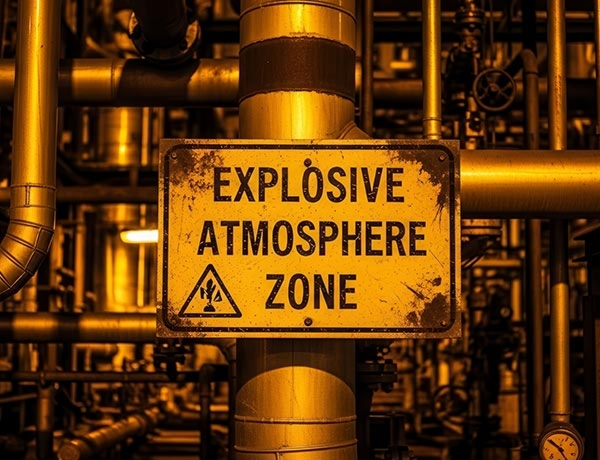
Working as a DSEAR consultant, whether auditing, designing new projects, or checking current installations, I see and read many DSEAR risk assessments, and cannot help thinking that there is a lack of understanding as to what is actually required.
The most common mistake in DSEAR risk assessments
The most common mistake? Is that auditors appear to miss the requirements detailed in paragraph 224 of the L138 code of practice. This relates to the term "adequate ventilation" and the requirement to ensure dangerous substances that also have "Toxic" hazards are first considered under COSHH, which will typically require a much higher level of ventilation (air changes per hour) than that required to stay below 25% of any lower explosive limit.
The second most common mistake, is that auditors perceive a DSEAR risk assessment is only about detailing explosive atmosphere control and hazard area classification, often missing the finer detail in respect of CompEx and the ongoing compliance status of EPS's or Explosive protective systems.
What DSEAR actually requires
DSEAR is the control of Explosive atmospheres resulting from dangerous substances. It requires that all areas where the explosive atmosphere potential exists, whether from flammable vapours or powders such as flour, then Atex rated equipment should / must be used in accordance with DSEAR regulation 7, which include compliance with the EPS and EHSR regulations. There are some allowances, where safety systems such as gas detection is used, but only to neutralise all sources of ignition, and shut processes down long before lower explosive conditions are reached.
How ATEX and the EPS Regulations fit together
The EPS Regulations are the UK implementation of the "EU" ATEX Directive for equipment intended for use in potentially explosive atmospheres. The EHSR's, or Essential Health and Safety Requirements, are the specific requirements that products (including equipment, protective systems, and safety devices) must meet when used in potentially explosive atmospheres, as detailed in the HSE document in the EPS Regulations.
So, it all links back to DSEAR, the principal control regulation. Thus, not understanding the requirements of DSEAR can put a company in a very bad and vulnerable place, in respect to the potential for HSE prosecution. Why you might ask? Because the reality is that, before any place where an explosive atmosphere potential exists, in accordance with DSEAR regulation 7, the "company" or Duty Holder should ensure all explosive potential areas were appropriately checked, by a person "competent" in explosive atmosphere control, BEFORE THOSE SYSTEMS WERE USED.
Why this matters: verification before use
DSEAR states:
Verification of places containing explosive atmospheres
R7 Para 391 - Verification of explosion safety should be carried out by someone with sufficient training and experience in explosion protection. If sufficient verification expertise exists in-house then it may be performed by that person(s) but the appointed person(s) should be impartial and sufficiently independent to carry out the assessment/verification effectively. Otherwise external competent verification should be obtained. The procedure should confirm that the plant, equipment, protective systems, safety devices, components and their combinations, and the building/structure housing them, are suitable for use with the dangerous substances that are to be used in the workplace and the classification(s) of potentially explosive atmosphere that may exist within this.
First and foremost, any company / auditor needs to understand the legal requirements of the DSEAR regulation, so they can ensure they meet their obligations of "how" they should be controlling places where the potential for explosion exists. This will then lead into the criteria of Atex equipment and CompEx Installations and ongoing inspections.
Where CompEx comes in
CompEx is again a legal requirement, which details 14 differing qualifications required to work in areas with explosive atmosphere potential, this would include any electrical or mechanical work in or immediately around an established Ex Zone, typically defined as a "safe Area".
The CompEx course is challenging and has a typical 70% failure rate, for those electrical engineers taking it for the first time, such are its complexities, but once certified, such engineers are worth their weight in gold.
Equally, if "Project Engineers" are themselves NOT qualified to work on those that include areas classified as "Hazardous Zones" then the company could be found "negligent" in a court of law for appointing / employing "Non-Competent" persons and subcontractors alike.
Learn more
If you want to learn more, enrol on one of our 3 day DSEAR course, which explains this in great detail.